
When organizations face change, the common approach is to focus on visible
adjustments—motivating new behaviours, revising job descriptions, introducing new
structures, or adding performance bonuses. These steps are useful, but they only
address the surface. Real transformation requires looking deeper—into the values and
culture that shape behaviour.
Why Values Matter
Behaviour doesn’t exist in isolation. It is driven by internal intentions and beliefs. For
example, when an employee completes a development plan, is it because the manager
insists (conformist values) or because she wants to steer her own growth (achievement
values)? Understanding this difference is crucial because sustainable change depends
on aligning external actions with internal drivers.
The Four Quadrants of Change
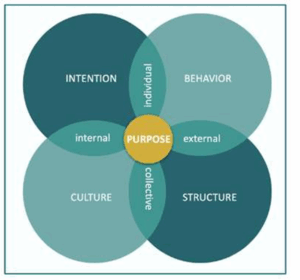
Ken Wilber’s Four Quadrant Model offers a powerful lens for analysing change. It shows
how internal and external aspects, both individual and collective, interact:
• Upper Left (Individual/Internal): Intentions, values, and mindsets.
• Upper Right (Individual/External): Observable behaviours and actions.
• Lower Left (Collective/Internal): Shared culture and norms.
• Lower Right (Collective/External): Organizational structures and systems.
Change in one quadrant affects the others. For instance, introducing self-managing
teams (lower right) requires employees to take initiative (upper right), which depends on
values like autonomy and trust (upper left). Without a culture that supports
collaboration and tolerates failure (lower left), the structure will fail.
Culture as the Invisible Force
Spiral Dynamics and Value Evolution
To understand values, Spiral Dynamics, based on Clare W. Graves’ research, is
invaluable. It explains how human value systems evolve in response to life conditions.
As environments become more complex, our internal capacities adapt in distinct
stages. These stages—such as survival, conformity, achievement, and collaboration—
shape both individual and organizational behaviour.
Mapping these stages to Wilber’s quadrants helps leaders design change that is
functional and sustainable. For example:
• Individual values (upper left) influence personal behaviour (upper right).
• Collective culture (lower left) shapes organizational systems (lower right).
The Core Insight
Reflective Questions
When planning change in your organization, which quadrant do you tend to focus on
most—and which do you often overlook?
How well do your current organizational structures align with the underlying culture and
values of your teams?
What steps can you take to ensure that individual values and collective culture support
the changes you want to implement?